Create a PostgreSQL sink connector
Use a PostgreSQL sink connector to keep tables in a PostgreSQL database up to date with the changes a source connector captures. The connector reads the Kafka topics you select and writes each topic to the table you map it to.
Prerequisites
- A CDC Service whose status is Healthy. See Create a CDC Service.
- Topics with change data, written by a source connector such as a PostgreSQL source connector.
- A PostgreSQL database that the workspace can reach, and a user with the privileges in Prepare the PostgreSQL database.
Prepare the PostgreSQL database
The connector inserts and updates rows by primary key, deletes the rows that are deleted in the source, and creates the tables and columns that are missing. Its user needs INSERT, UPDATE, and DELETE on the existing target tables, and USAGE and CREATE on the target schema.
-
Connect to the target database as a user that can grant these privileges.
-
Run the statements below. Replace
YOUR_USERwith the connector user, andpublicwith your schema if you write to another one.GRANT USAGE ON SCHEMA public TO YOUR_USER;GRANT CREATE ON SCHEMA public TO YOUR_USER;GRANT INSERT, UPDATE, DELETE ON ALL TABLES IN SCHEMA public TO YOUR_USER; -
Make the connector user the owner of each existing target table that the connector needs to add columns to. PostgreSQL lets only the owner add columns, and the connector user already owns the tables it creates.
ALTER TABLE public.YOUR_TABLE OWNER TO YOUR_USER;
Create the connector
-
Select Data platform → Workspace management, then select your workspace.
-
On the Overview tab, under Services, select the CDC card.
-
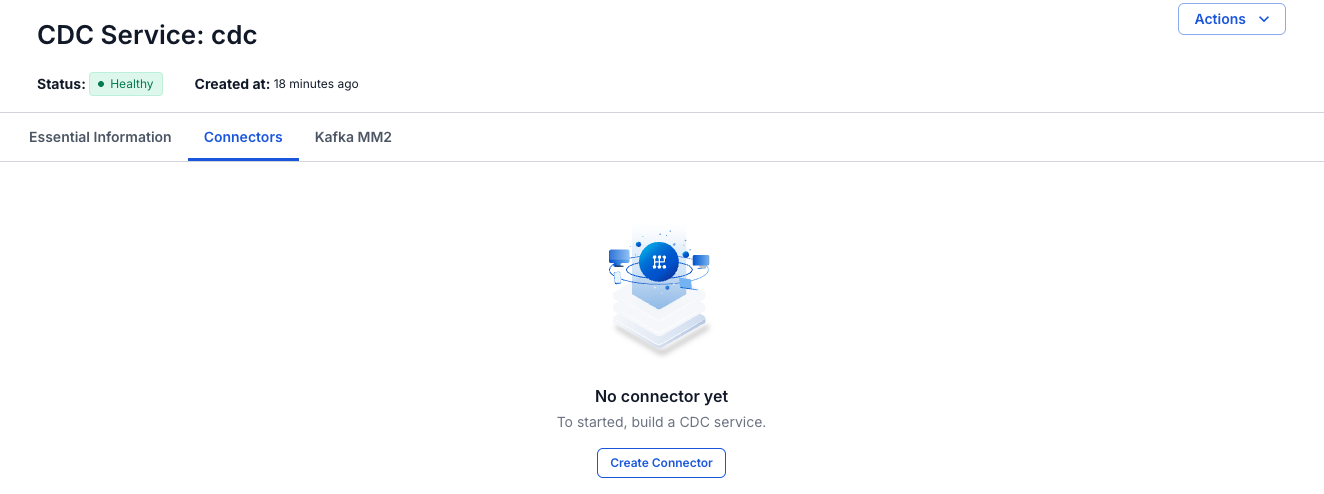
Select the Connectors tab, then select Create Connector.
-
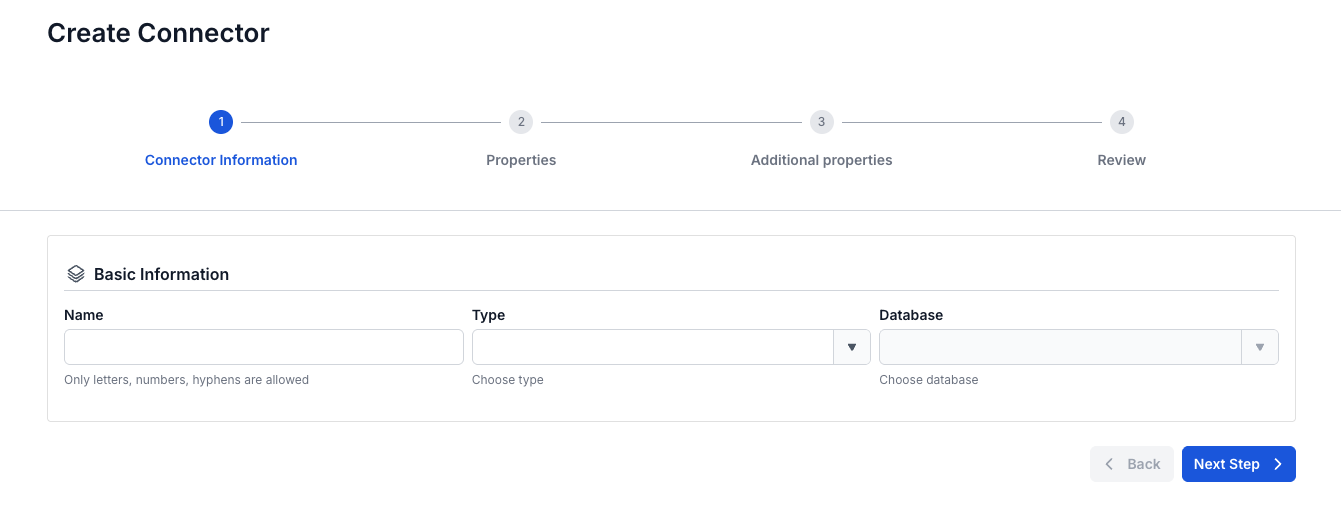
On the Connector Information screen, enter a Name, select sink in Type, and select PostgreSQL in Database.
-
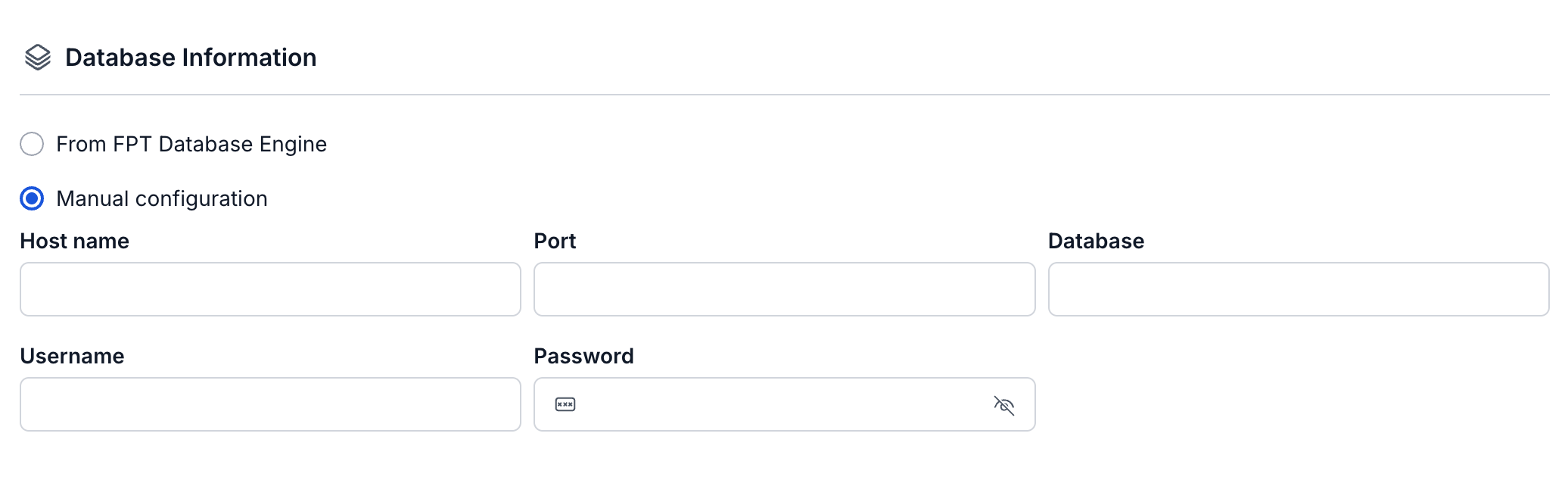
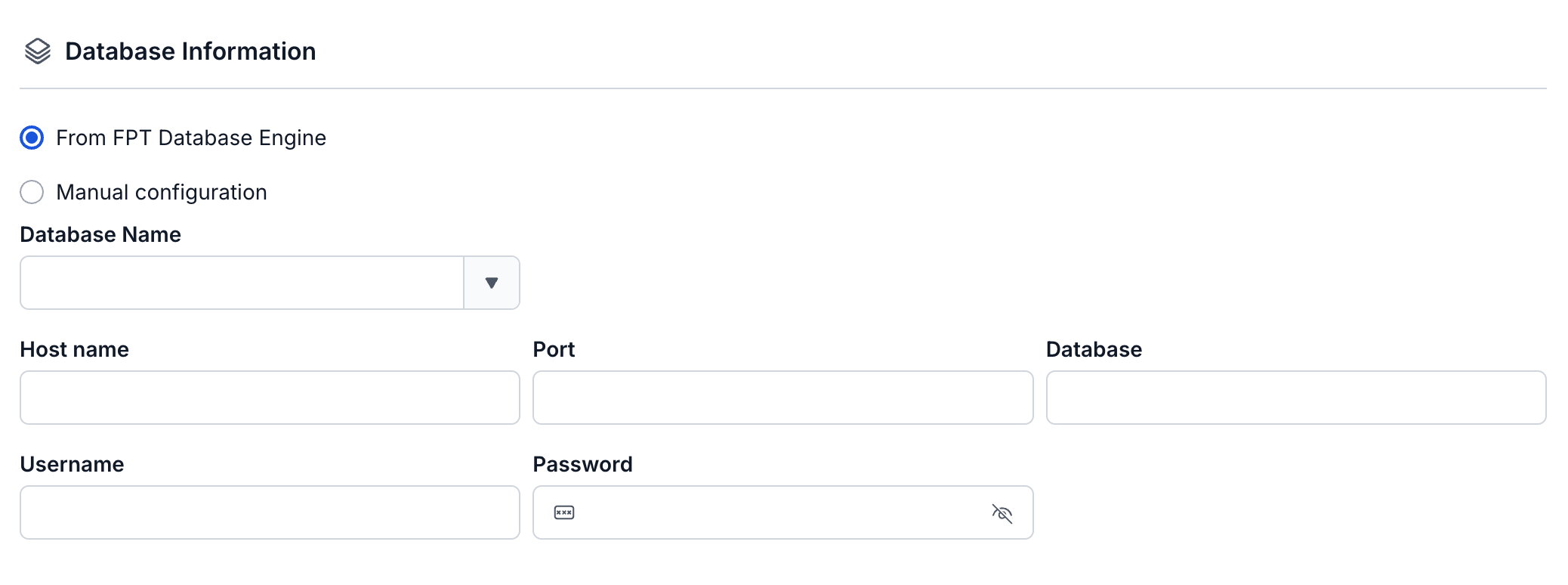
Select Next Step. On the Properties screen, enter the connection details, then select Test connection. Next Step becomes available after the test succeeds.
-
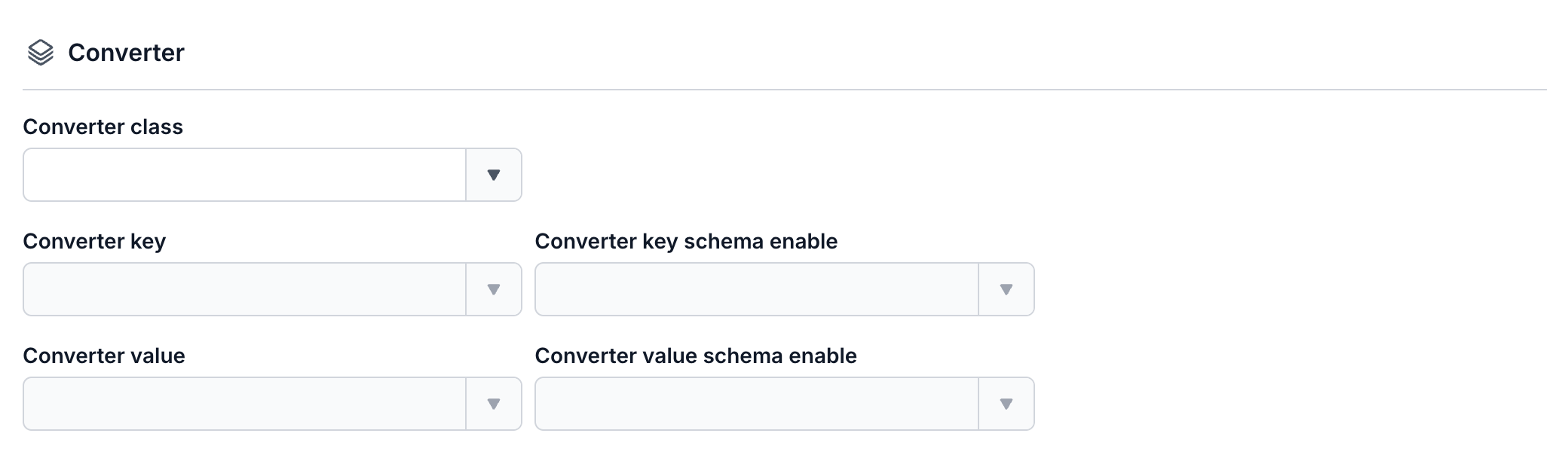
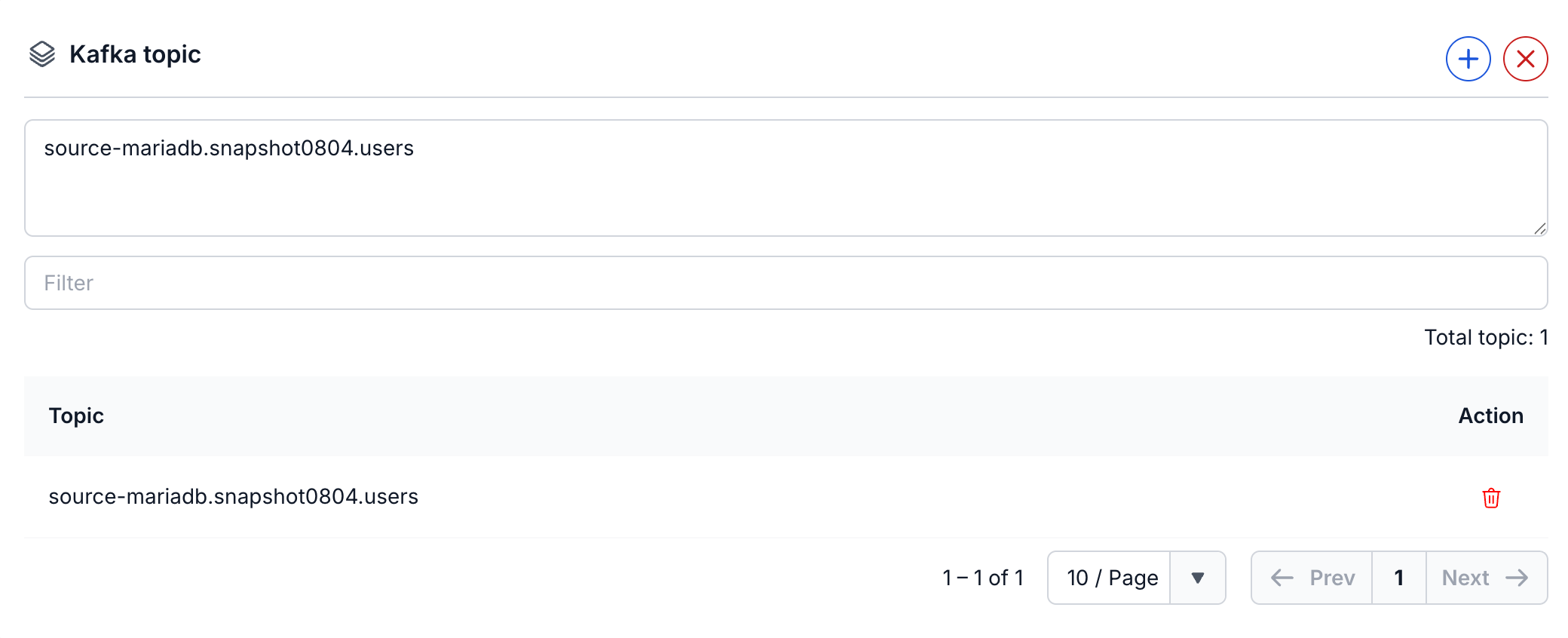
On the same screen, choose a Converter class and set the four converter fields. Under Kafka topic, select +, then select the topics to read in the Select topics panel.
-
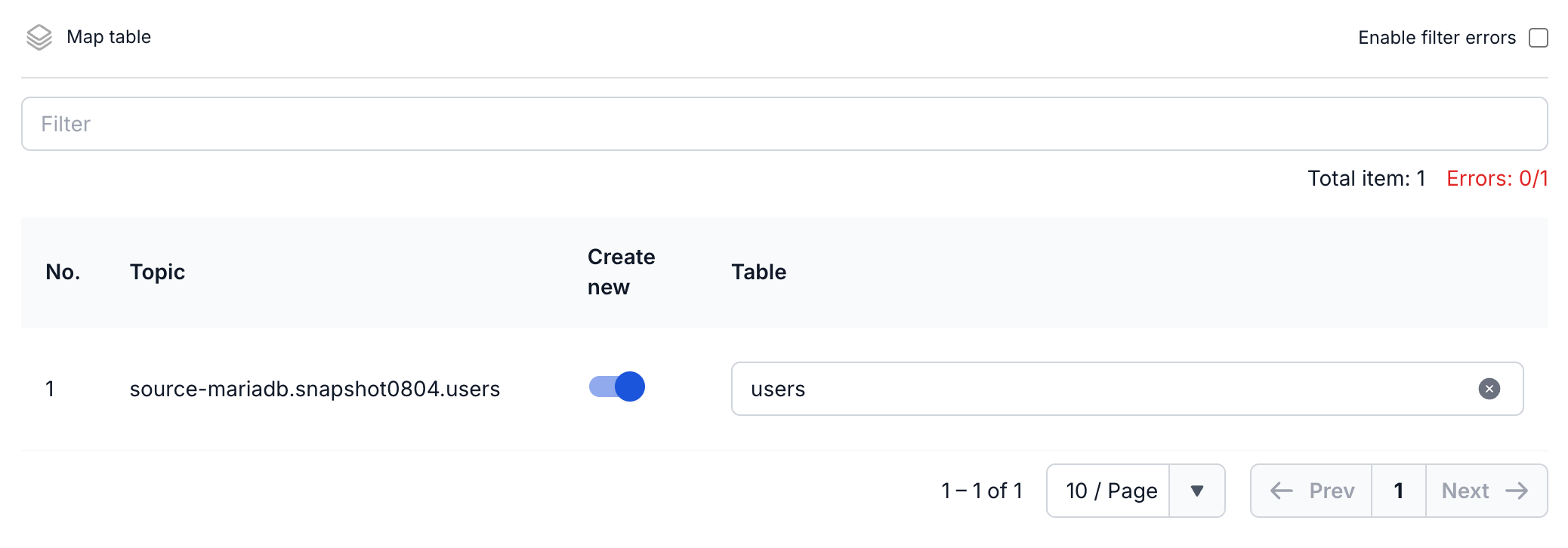
Select Next Step. On the Additional properties screen, set the fields in the Database timezone, Database source, Task, Schema, Map table, and Error Tolerance sections.
-
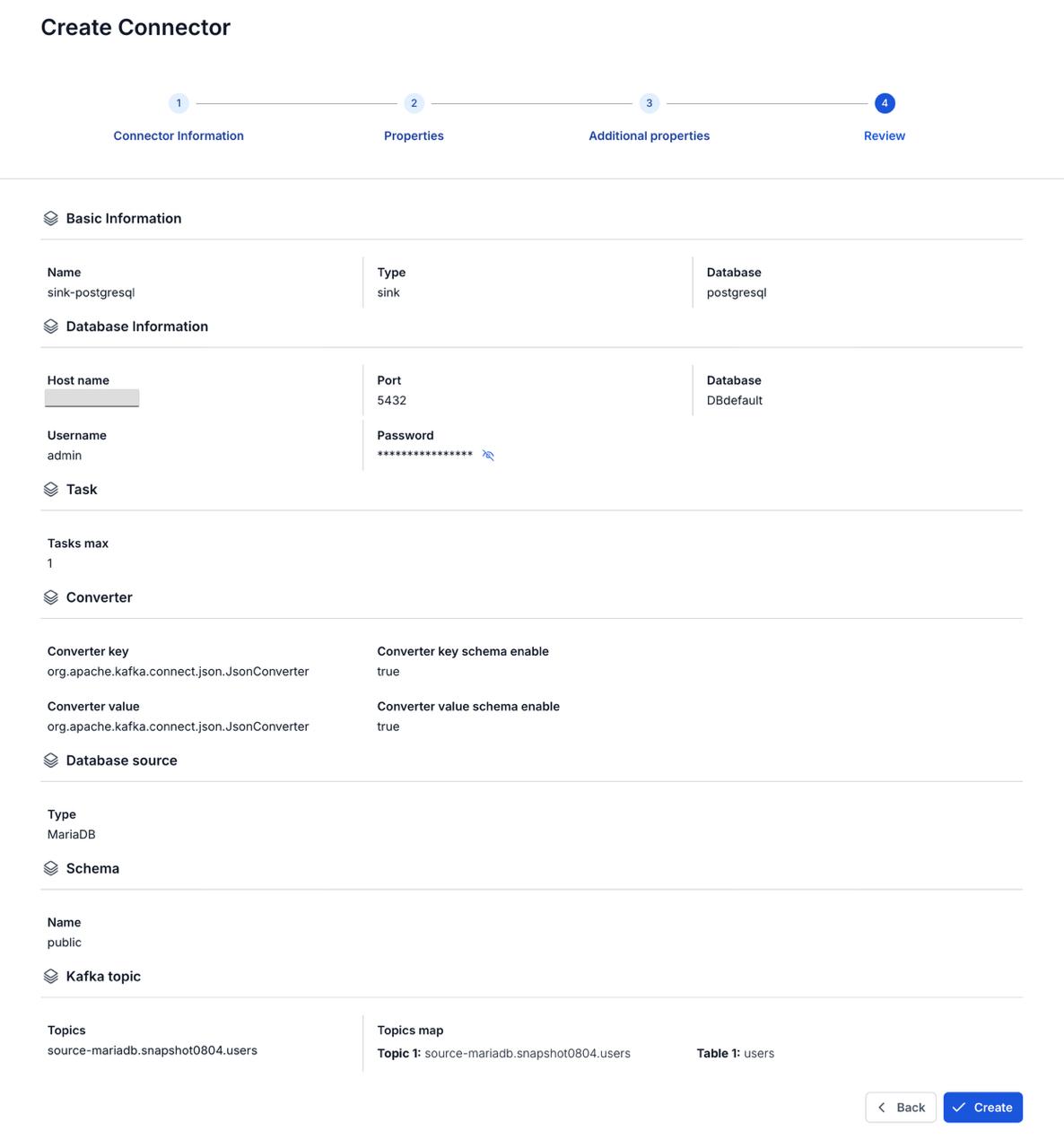
Select Next Step and check the settings on the Review screen.
-
Select Create.
The portal returns to the Essential Information tab of the CDC Service. On the Connectors tab, the new connector shows the status Running, with every Tasks counter at 0 until its task starts, which can take up to about 2.5 minutes.
Connector settings
Connector information
| Field | Required | Description |
|---|---|---|
| Name | Yes | The connector name. Use lowercase letters, digits, and hyphens (-) only. Upper-case letters, _, ., and spaces are rejected with "Name has invalid characters". |
| Type | Yes | Select sink. |
| Database | Yes | Select PostgreSQL. |
Properties
In the Database Information section, choose From FPT Database Engine or Manual configuration. Manual configuration is selected by default. With From FPT Database Engine, select your instance in Database Name to fill in Host name and Port. See Connection mode.
| Field | Required | Description |
|---|---|---|
| Database Name | Yes | Shown with From FPT Database Engine only. The PostgreSQL instance in FPT Database Engine. Enter the database to write to in Database. |
| Host name | Yes | The host name or IP address of the PostgreSQL server. |
| Port | Yes | The port of the PostgreSQL server, for example 5432. The field has no default value in Manual configuration. |
| Database | Yes | The database that the connector writes to. |
| Username | Yes | The user that the connector connects as. It needs the privileges in Prepare the PostgreSQL database. |
| Password | Yes | The password of that user. |
| Converter class | Yes | The converter class for this connector. The portal offers JDBC. The four converter fields stay greyed out until you choose a class. See Converter. |
| Converter key, Converter key schema enable, Converter value, Converter value schema enable | Yes | How the connector reads the keys and values of the messages, and whether they carry a schema. With JDBC, the key and value converters offer only org.apache.kafka.connect.json.JsonConverter, and the schema enable fields offer only true. |
| Kafka topic | Yes | The topics to read, up to 100. Select + to open the Select topics panel, select the topics, then select Select. See Topics. |
Additional properties
| Field | Required | Description |
|---|---|---|
| Timezone | No | The timezone of the data in the source database: UTC or Asia/Ho_Chi_Minh. The field has no default. See Timezone. |
| Type (under Database source) | Yes | The type of the source database that the topics come from: None, PostgreSQL, MySQL, MariaDB, or SQLServer. |
| Number of tasks | Yes | How many tasks process the topics in parallel. Default 1. See Tasks max. |
| Schema | Yes | The schema in the target database that the connector writes tables to. The list shows the schemas of that database. Default public. Grant the connector user rights on it first. |
| Topic, Create new, Table (under Map table) | Yes | The table that receives the records of each topic. Create new is on by default, and Table shows the table name from the topic. Keep it on to create the table, or turn it off to use an existing one. Table names are case-sensitive. Select Enable filter errors to list only the rows with errors. See Map table. |
| Mode (under Error Tolerance) | Yes | What the connector does with a message that it cannot read or convert. None stops the connector with status Failed. All skips the message and sends it to the topic you enter for failed records. The field has no default. See Error tolerance. |