ストレージを管理する
すべてのGPU Containerには2種類のストレージがあります:
| 種類 | 永続性 | 設定タイミング |
|---|---|---|
| Temporary disk | コンテナを停止または削除すると削除される | GPU instanceに自動で含まれる |
| Persistent disk | 停止/起動サイクルをまたいで保持される | コンテナ作成時にオプションで追加 |
Temporary disk
Temporary diskはすべてのGPU instanceに付属する高速ローカルNVMeストレージです。サイズはインスタンスサイズに応じて固定されています(例:1×H100は1 TB)。コンテナ内のデフォルト作業ディレクトリで利用できます。
Temporary diskのアタッチ/デタッチはできません。コンテナと一緒に自動的に作成・削除されます。
警告
コンテナを停止または削除すると、Temporary disk上のすべてのデータが完全に失われます。保持する必要があるデータにはPersistent diskや外部ストレージサービスを使用してください。
Persistent disk
Persistent diskはコンテナ作成時にアタッチするオプションのブロックストレージです。停止/起動サイクルをまたいでデータが保持され、コンテナ起動時に自動的に再アタッチされます。
作成時にPersistent diskをアタッチ
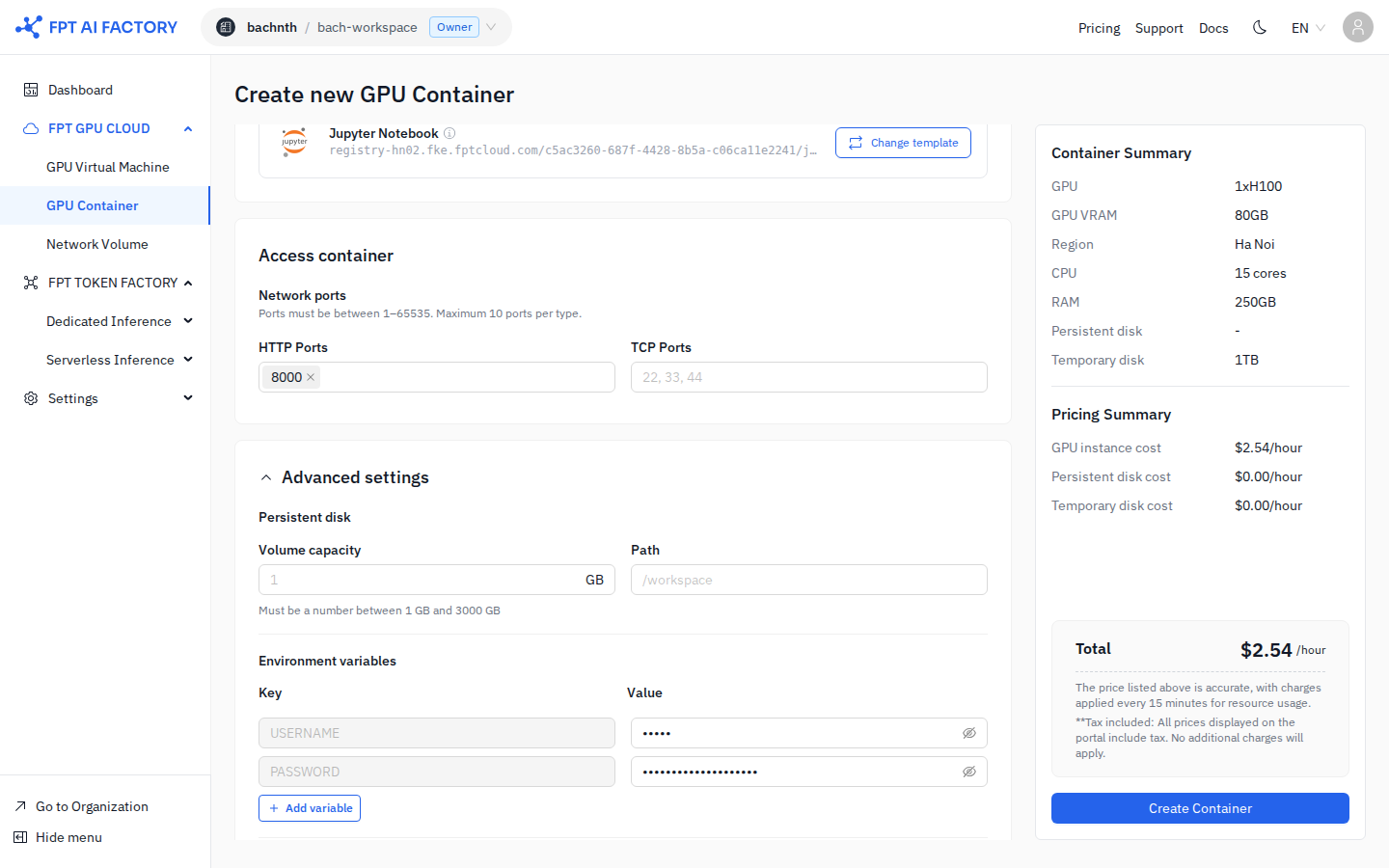
- コンテナ作成時に Advanced settings を展開します。
- Persistent disk に以下を入力します:
- Volume capacity — GB単位のサイズ(1〜3,000 GB)。
- Path — コンテナ内のマウントパス(デフォルト:
/workspace)。
- Persistent diskのコストが右側の Pricing Summary に表示されます。
料金
Persistent diskは実際に使用しているデータ量に関わらず、プロビジョニングしたGB/時ごとに課金されます。料金はコンテナ作成フォームの Pricing Summary に表示されます。
注記
コンテナ作成後にPersistent diskのサイズを変更したり、デタッチすることはできません。異なるサイズが必要な場合は、コンテナを削除して希望の容量で新しく作成してください。